Keynotes
Technology for Health and Wellbeing in the Workplace
Bio:
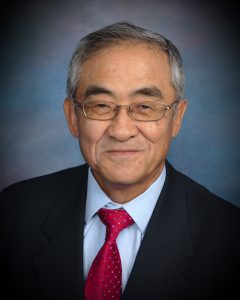
Georgios Fainekos (aka Dr. Φ) is a Senior Principal Scientist at Toyota Motor North America R&D, within TRI-NA, where he works on trustworthy AI-enabled Cyber-Physical Systems (CPS), with emphasis on automated driving systems and mobile robots. His research develops formal and computational methods for specifying, testing, verifying, and controlling autonomous systems under uncertainty. His technical interests lie at the intersection of applied logic, formal verification, requirements, automated testing, control theory, artificial intelligence, machine learning, and optimization. Before joining Toyota, Dr. Fainekos was a tenured Associate Professor of Computer Science and Computer Engineering in the School of Computing and Augmented Intelligence (SCAI) at Arizona State University (ASU). At ASU, he led NSF, DARPA, AFRL, and industry-funded projects with partners including Intel, Toyota, and Bosch. He has also been a Postdoctoral Researcher at NEC Laboratories America in the System Analysis and Verification Group. He received his Ph.D. in Computer and Information Science from the University of Pennsylvania in 2008 where he was affiliated with the GRASP laboratory. He also holds a Diploma degree (B.Sc. & M.Sc.) in Mechanical Engineering from the National Technical University of Athens (NTUA). Dr. Fainekos received the NSF CAREER Award in 2013 and the ASU SCIDSE Best Researcher Junior Faculty Award. He was recognized among the top 5% of teachers at ASU in 2019 and 2021. His work has received several awards and nominations, including the Runtime Verification Test-of-Time Award and the Frank Anger Memorial ACM SIGBED/SIGSOFT Student Award. He has also served as program co-chair of the ACM International Conference on Hybrid Systems: Computation and Control.
Abstract
How can we create technologies to help us reflect on and potentially change our behavior, as well as improve our health and overall wellbeing both at work and at home? In this talk, I will briefly describe the last several years of work our research team has been doing in this area. We have developed wearable technology to help families manage tense situations with their children, mobile phone-based applications for handling stress and depression, as well as automatic stress sensing systems plus interventions to help users just in time. The overarching goal in all of this research is to develop intelligent systems that work with and adapt to the user so that they can maximize their personal health goals and improve their wellbeing.
Title:
Bio:
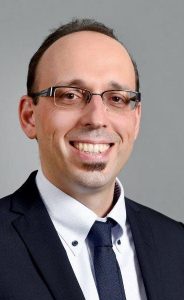
Dariusz Mikulski, Ph.D. is a Lead Research Scientist for Ground Vehicle Robotics (GVR) in the US Army DEVCOM Ground Vehicle Systems Center (GVSC). He has been with GVSC for over 20 years and is dedicated to improving cybersecurity, AI, and cooperative teaming in military robotic and autonomous systems. Dr. Mikulski leads GVR’s Hybrid Autonomy & Cybersecurity Research (HACR) Laboratory to study and solve issues at the intersection of vehicle autonomy and cybersecurity; and has served as the Technical Manager for the OSD-funded Cybersecurity for Robotic & Autonomous Systems Hardening (CRASH) Joint Capability Technology Demonstrator (JCTD). He has been awarded the Army’s Meritorious Civilian Service Medal (2022) and Civilian Service Commendation Medal (2021) for exemplary service and excellence for his work in robot cybersecurity. He also serves as a Director on the National Defense Industrial Association (NDIA) Michigan Chapter Board, performing as the Chair for its annual Cyber Physical Systems Security Summit (CPS3). Dr. Mikulski earned his Ph.D. in Electrical and Computer Engineering (2013) at Oakland University. He also earned his Bachelor in Science in Engineering (BSE) in Computer Science (2003) from the University of Michigan (Ann Arbor) and Masters in Computer Science and Engineering (2006) from Oakland University.
Abstract
The last years saw a steep increase in the number of wearable sensors and systems, mhealth and uhealth apps both in the clinical settings and in everyday life. Further large amounts of data both in the clinical settings (imaging, biochemical, medication, electronic health records, -omics), in the community (behavioral, social media, mental state, genetic tests, wearable driven bio-parameters and biosignals) as well as environmental stressors and data (air quality, water pollution etc.) have been produced, and made available to the scientific and medical community, powering the new AI/DL/ML based analytics for the identification of new digital biomarkers leading to new diagnostic pathways, updated clinical and treatment guidelines, and a better and more intuitive interaction medium between the citizen and the health care system.
Thus, the concept of connected and translational health has started evolving steadily, connecting pervasive health systems, using new predictive models, new approaches in biological systems modeling and simulation, as well as fusing data and information from different pipelines for more efficient diagnosis and disease management.
In this talk, we will present the current state-of-the-art in personalized health care by presenting cases from COVID-19 and COPD patients using advanced wearable vests and new technology sensors including lung sound and EIT, new outcome prediction models in COVID-19 ICU patients fusing X-Rays, lung sounds, and ICU parameters transformed via AI/ML/DL pipelines, new approaches fusing environmental stressors with -omics analytics for chronic disease management, and finally new ML/AI-driven methodologies for predicting mental health diseases including suicidality, anxiety, and depression.
Technology for Health and Wellbeing in the Workplace
Bio:
Abstract
How can we create technologies to help us reflect on and potentially change our behavior, as well as improve our health and overall wellbeing both at work and at home? In this talk, I will briefly describe the last several years of work our research team has been doing in this area. We have developed wearable technology to help families manage tense situations with their children, mobile phone-based applications for handling stress and depression, as well as automatic stress sensing systems plus interventions to help users just in time. The overarching goal in all of this research is to develop intelligent systems that work with and adapt to the user so that they can maximize their personal health goals and improve their wellbeing.